Introducing Identity and Access Management (IAM)
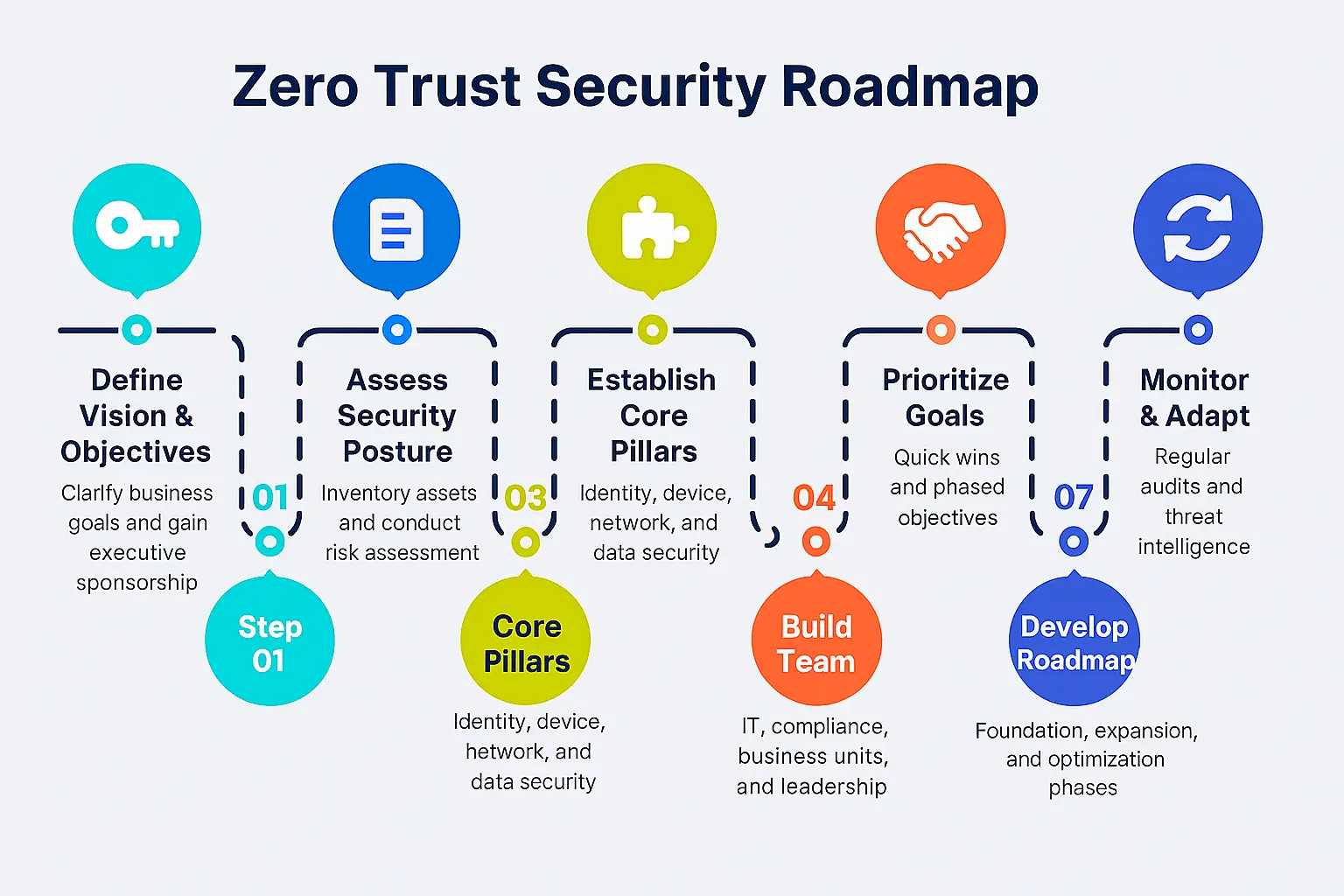
What is IAM? – Identity and Access Management (IAM) is a foundational cyber security framework that ensures the right users and devices have appropriate access to critical resources. As enterprises expand into cloud, mobile, and hybrid environments, managing digital identities and permissions becomes increasingly complex—and vital for protecting sensitive data. This post unpacks IAM’s core concepts and how it contributes towards Zero Trust, highlights its key components, explores benefits and challenges, and outlines best practices for a modern organisation.
What Is IAM?
IAM is the set of processes, policies, and technologies used to manage digital identities and control access to systems, applications, and data. It covers user onboarding and offboarding, authentication methods, authorisation policies, and ongoing monitoring. By centralising identity workflows, IAM helps enforce least-privilege access, reduce credential sprawl, and streamline compliance efforts.
Here’s a blog post draft that explores the history of Identity and Access Management (IAM) and its evolution into a vital cybersecurity discipline:
The History of Identity and Access Management (IAM)
In today’s hyper-connected world, securing digital identities is more critical than ever. But how did Identity and Access Management (IAM) become the backbone of modern cybersecurity? Let’s take a journey through its evolution – from humble beginnings to cutting-edge innovations.
🕰️ Early Days: Manual Access Control
IAM started as a simple concept: controlling who could access what. In the early days of computing, organisations used manual processes to manage user credentials. IT administrators maintained lists of usernames and passwords, often stored locally. These systems were prone to human error and lacked scalability.
📁 The Rise of Directory Services
The 1990s introduced directory services like LDAP and Microsoft Active Directory. These centralised user data and access permissions, making it easier to manage large networks. This era marked the beginning of structured identity management.
🌐 Web Applications and SSO
As web applications exploded in the early 2000s, IAM systems adapted. Single Sign-On (SSO) emerged, allowing users to authenticate once and access multiple systems. This improved user experience and reduced password fatigue.
🔄 Automation and Governance
IAM evolved to include automated workflows for onboarding and offboarding employees. Identity Governance and Administration (IGA) tools helped organizations ensure compliance and streamline access provisioning – transforming IAM from reactive to proactive.
🔐 Privileged Access Management (PAM)
With the rise of insider threats and data breaches, protecting privileged accounts became a priority. PAM solutions were developed to monitor and control access to sensitive systems, adding another layer of security.
☁️ Cloud and Mobile Revolution
The 2010’s brought cloud computing and mobile devices into the mix. IAM had to adapt to decentralised environments. Identity-as-a-Service (IDaaS) platforms emerged, offering scalable cloud-based solutions. Multifactor authentication (MFA), biometrics, and adaptive access controls became standard.
🧠 AI and Decentralised Identity
Today, IAM is embracing decentralised identity models, where users control their own digital identities using blockchain and other technologies. Artificial Intelligence is also being integrated to detect anomalies, predict threats, and enhance decision-making.
Core Components of IAM
- Digital Identity Management: Creating, storing, and maintaining user and device profiles.
- Authentication: Verifying user or device identity through passwords, tokens, biometrics, or certificates.
- Authorisation: Defining and enforcing who can access which resources and under what conditions.
- Administration & Auditing: Automating user provisioning, deprovisioning, role management, and logging access events for compliance.
- Enhanced Security: Reduces the risk of unauthorised access by enforcing multi-factor authentication and least-privilege policies.
- Operational Efficiency: Automates repetitive tasks like password resets and user provisioning, freeing IT to focus on strategic work.
- Compliance & Reporting: Provides audit trails and granular access logs to satisfy regulations such as GDPR, HIPAA, and SOX.
- Better User Experience: Enables single sign-on (SSO), reducing password fatigue and improving productivity.
Common IAM Technologies
- Single Sign-On (SSO): Grants users one set of credentials to access multiple applications.
- Multi-Factor Authentication (MFA): Adds layers of verification—SMS codes, authenticator apps, or biometrics.
- Role-Based Access Control (RBAC): Assigns permissions based on job functions or roles.
- Privileged Access Management (PAM): Secures and monitors high-risk accounts like administrators or service accounts.
IAM Challenges and Best Practices
Implementing IAM can surface challenges around legacy systems, user adoption, and scalability. To overcome these obstacles:
- Conduct an Identity Risk Assessment to map critical assets and threat vectors.
- Roll Out in Phases, starting with high-risk or high-value applications.
- Standardise on Protocols such as SAML, OAuth, and OpenID Connect for interoperability.
- Establish Clear Governance with defined roles, approval workflows, and regular policy reviews.
- Monitor Continuously with real-time alerts on unusual login patterns or access anomalies.
Emerging Trends in IAM
As digital ecosystems evolve, IAM is adapting in several directions:
- Passwordless Authentication: Using biometrics or hardware tokens to eliminate passwords.
- Identity-Based Zero Trust: Trust decisions driven by identity attributes and risk signals, not network location.
- AI-Driven Risk Scoring: Machine learning models that assess login context and user behavior for dynamic access decisions.
- Decentralised Identity: Blockchain-enabled identity wallets that give users control over their credentials.
Conclusion
A robust IAM strategy is more than a toolkit – it’s a continuous discipline that balances security, usability, and compliance. By understanding IAM’s components and adopting best practices like phased rollouts, governance frameworks, and modern authentication methods, organisations can protect digital assets, streamline operations, and build trust with users and regulators alike. Start your IAM journey today by inventorying identities, defining clear access policies, and selecting solutions that scale with your business.