Advice – Prepare a Zero Trust Roadmap

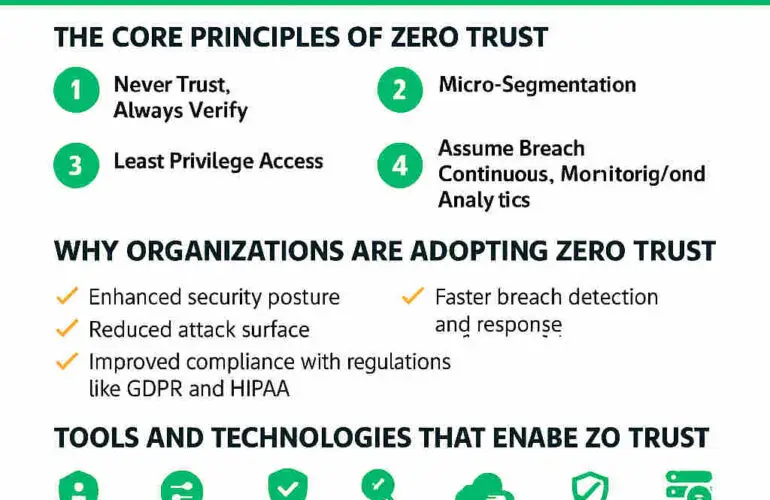
In today’s hyper-connected world, traditional perimeter-based security models are no longer enough. With remote work, cloud adoption, and increasingly sophisticated cyber threats, organisations need a new approach – Zero Trust. The principle is simple: never trust, always verify. But putting it into practice requires a clear, structured roadmap.
 
This guide walks you through the essential steps to prepare a Zero Trust security roadmap that is practical, scalable, and aligned with your business goals.
 

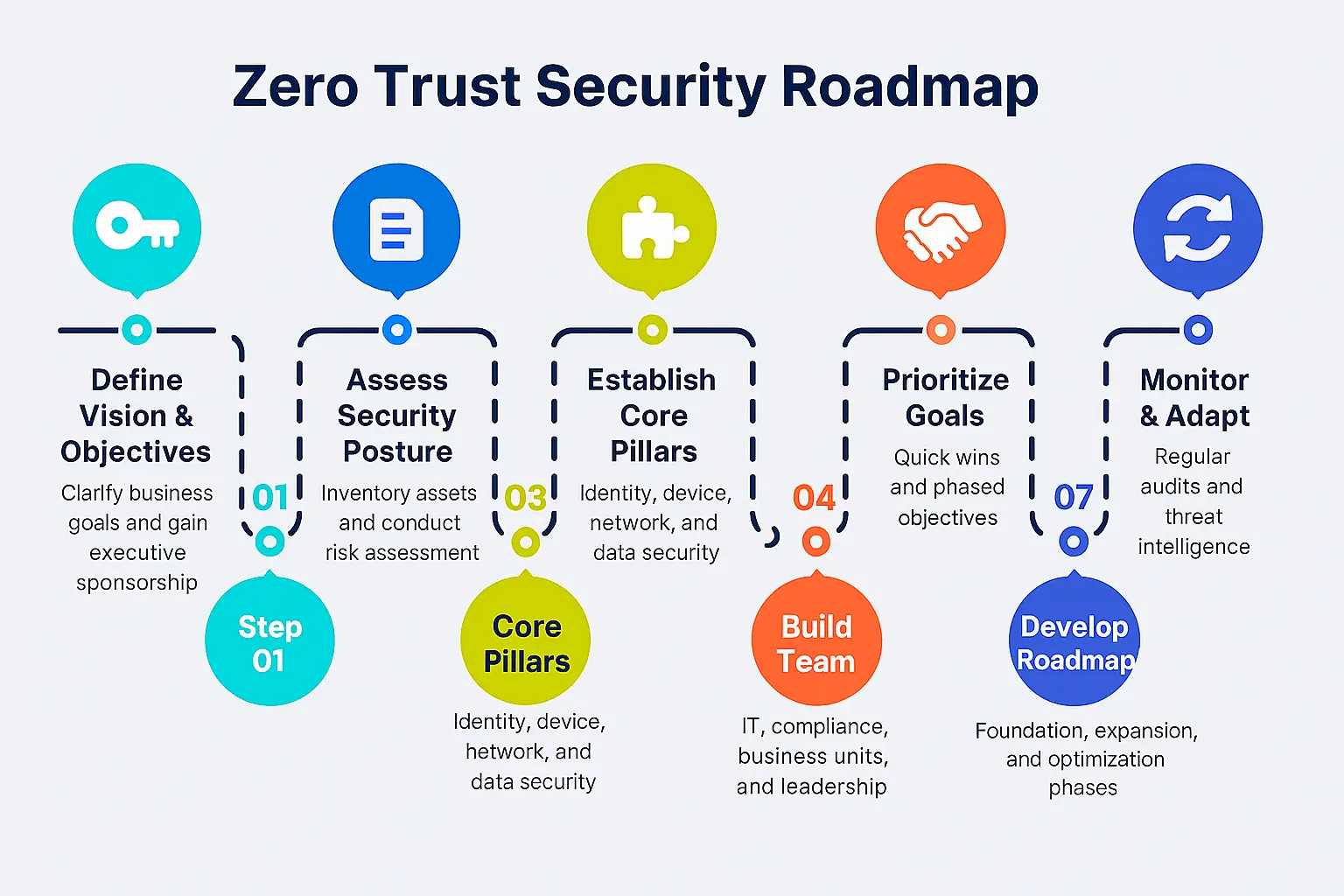
🔑 Step 1: Define Your Zero Trust Vision and Objectives

Before diving into technology, start with strategy.
 

• Firstly clarify business drivers: Are you aiming to protect sensitive data, meet compliance requirements, or reduce insider threats?

• Secondly set measurable goals: Examples include reducing lateral movement, improving visibility, or achieving specific compliance certifications
 
• Gain executive sponsorship: Zero Trust is not just an IT project – it’s an organisational shift. Leadership buy-in ensures funding and cultural aligment
 

🗺 Step 2: Assess Your Current Security Posture 

You can’t build a roadmap without knowing where you stand.

• Inventory assets: Catalog users, devices, applications, and data flows

• Evaluate existing controls: Identify gaps in identity management, endpoint protection, and network segmentation

• Risk assessment: Prioritise critical assets and high-risk areas that need immediate attention

🧩 Step 3: Establish Core Zero Trust Pillars

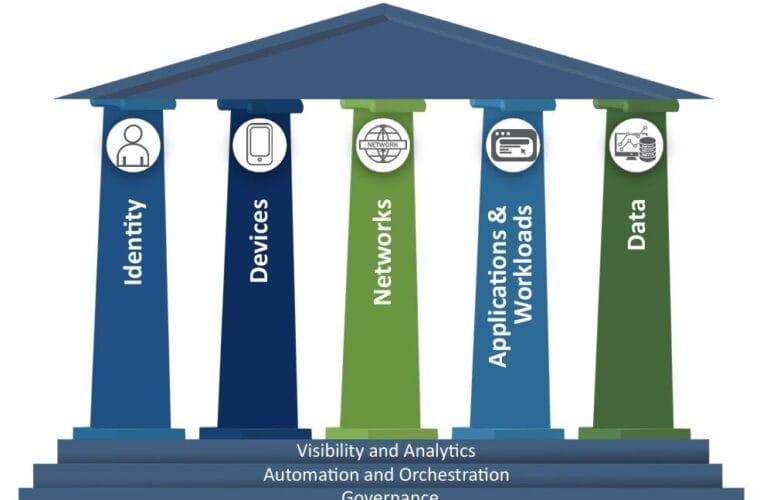
Zero Trust is built on several foundational components. Your roadmap should address each:
 
1. Identity & Access Management (IAM) – Enforce strong authentication, least privilege, and continuous verification
2. Device Security – Ensure endpoints are compliant, patched, and monitored
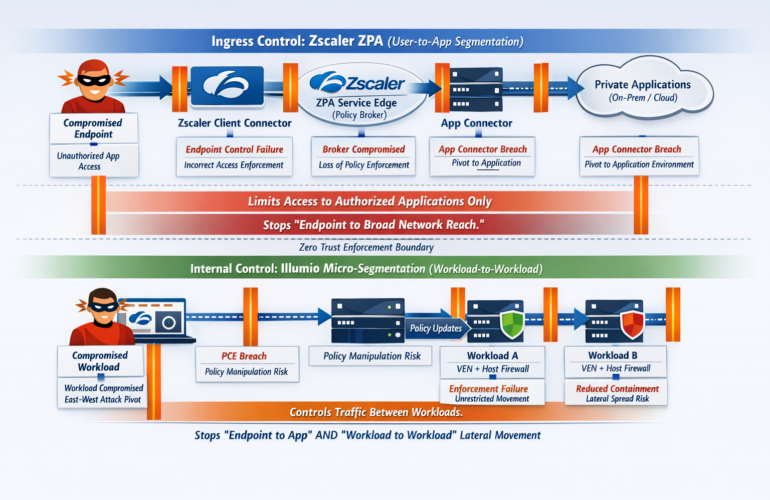
3. Network Segmentation – Limit lateral movement with microsegmentation and software-defined perimeters
4. Application Security – Protect workloads across on-premises and cloud environments
5. Data Protection – Classify, encrypt, and monitor sensitive data
6. Visibility & Analytics – Implement monitoring, logging, and AI-driven anomaly detection


🛠 Step 4: Prioritise Quick Wins and Long-Term Goals

A Zero Trust journey can feel overwhelming, so break it down:

• Quick wins: Deploy MFA, enforce conditional access, and improve endpoint

compliance

• Medium-term goals: Implement microsegmentation, adopt cloud-native security tools, and enhance monitoring

• Long-term goals: Achieve full automation, adaptive access policies, and continuous risk-based verification
 

🤝 Step 5: Build a Cross-Functional Team

 
Zero Trust touches every part of the organisation.
 

• IT & Security teams: Lead technical implementation

• Compliance & Legal: Ensure regulatory alignment

• Business units: Provide input on workflows and user experience

• Executive leadership: Drive cultural adoption and funding


📊 Step 6: Develop a Phased Roadmap

 Structure your roadmap into phases:

• Phase 1: Foundation – Identity, MFA, device compliance

• Phase 2: Expansion – Network segmentation, workload protection

• Phase 3: Optimisation – Automation, AI-driven analytics, continuous improvement

Each phase should include milestones, timelines, and KPIs to measure progress.
 

🔄 Step 7: Continuously Monitor and Adapt 

Zero Trust is not a one-time project – it’s an evolving strategy.
 

• Regular audits: Validate controls and policies

• Threat intelligence: Stay ahead of emerging risks

• Feedback loops: Adjust policies based on user experience and business needs

🚀 Conclusion

Preparing a Zero Trust security roadmap is about more than deploying new tools—it’s about reshaping how your organisation thinks about trust, access, and risk. By defining clear objectives, assessing your current state, and building a phased, business-aligned plan, you can create a resilient security posture that adapts to today’s threats and tomorrow’s challenges.
 
Zero Trust is a journey, not a destination. The sooner you start, the stronger your defenses will be

With over 25 years of experience delivering complex, high-value cybersecurity, infrastructure, and transformation programmes across global financial services and insurance sectors - Rob is recognised for delivering secure, scalable, and audit-ready solutions that not only protect enterprise assets but also enable business growth and resilience.Through his insights, Rob shares how to build resilient cyber strategies, navigate digital transformation, and lead organisations through the challenges of today’s rapidly evolving threat landscape. His writing blends practical experience with strategic foresight, offering actionable guidance on strengthening security postures while driving innovation

Leave a Reply